
Hostel History
← Back to the main guide: FIT Hostels
Taken from the 11th C Old French word “ostel” and morphing into the early 13th C English word, “hostel”, it referred to an inn, house of entertainment, lodgings, or a shelter for travelers. Side point:, at different times, it also referred to commercial luxury lodging, hospitals, and hospice & even host and hospitality.
A. 1900s ‘hostel’:
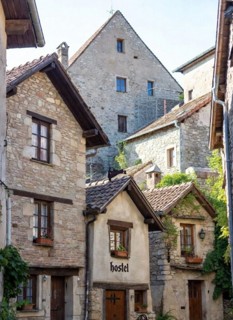
The 1900s ‘hostel’, was invented by Richard Schirrmann, a German schoolteacher (1909), as a budget, shared,
dormitory-style accommodation, aimed at young travelers, hikers, students, & backpackers, …. focused on nature activities, healthy outdoor youth travel, curfews, a non-commercial ethos, often with chores. Irony, that some FIT’s travelers migrate indefinitely by working as hostel staff as they move onward.
Schirrmann converted his own school into a hostel which evolved into his German Youth Hostel Association which evolved into independent national, not-for-profit organizations that are members of the global Hostelling International (HI) network., now known as Hostelling International, or HI).
There are an array of similar organizations independent of YHA:
“a&o Hotels and Hostels”, Generator Hostels, Selina, Meininger Hotels & St Christopher's Inns.
I was unaware of these associations until researching NOW, 6 years after I stopped foreign travel, …. probably because they were not highlighted as ‘BIG’ in my usual hostel research engines (Hostelworld, hostel.com , booking.com, Agoda (Asia).
Anecdote: 1964 VO5 Shampoos salesman: at 24 my first sales assignment with Alberto-Culver company (think VO5 shampoo) was to travel the entire Oregon coast visiting small drugstores. Unfortunately, when I started, I had no money and my company didn't pay expenses until after I had expended them. A poor, young man's catch 22.
My 1st night I slept in my car, shaved in a chilly gas station's bathroom & its cold water. On my 2nd night I stayed in the ratty 40 tear old Tillamook, Oregon’s Tillamook Hotel ((now converted to apartment).I can still visualize the bare-bones room with a single bare light bulb hanging down from the high ceiling. Everything after that was luxury.
A 1960’s hostel would have been a luxury.
2000s (21st C) Hostels:
Since the early 2000’s, a massive increase in travelers of all ages & travel ambitions dramatically increased the demand for more higher quality lodging capacity everywhere including in formerly less traveled areas.
This explosive travel expansion created equally massive increased demand for low cost, higher quality lodging which prompted a steady rapid explosion of the traditional hostel lodging that varied greatly in form, quality and variety.
But realistically, hostels were already trending toward a greater variety of quality and amenities than had been seen before just to compete. Now, there is great overlap between all the hostel configurations.
FIT’s free independent travelers backpackers, & students, solo adventurers dominate these hostels worldwide because they offer affordability, safety, a variety of room choices, fully equipped kitchens & dining areas, relaxing common rooms, bathrooms with hot showers, and useful travel-specific amenities (laundry, travel desk (info & booking assistance), currency exchange, long term luggage storage), AND at very affordable prices compared to alternative lodgings.
2020s (21st C) Hostels:
After Covid’s hostel massive disruptive decline, hostels world wide exploded in recovery particularly in Asia-Pacific region. Post-Covid recovery indicated 2021 global hostel inventory was over 23,440 units, projected to reach around 37,510 by 2027.
That’s a 60% increase.
This explosive expansion of the hostel market in size and geography will, IMO, make FIT Travelers research & planning all the more important as each FIT traveler and all other travelers try to match their desired profile of hostel’s quality, price & amenities with the constant explosion of hostel & lodging options.
This explosion is already blurring even further the distinction between hostels and small B&Bs & home stays dramatizing their warm & cozy ambience, while large hostel alternatives like hybrid hostels & poshtels try to tap into or bridge the gap between themselves and traditional hostels.
Anecdote: In a medium to high end hostel in Cusco, Peru clothes line drying was the norm because electricity pumped from Lima was so expensive. Certainly, a high end Cusco hostel might have a dryer, but that is why the price is higher than mine.
Anecdote: I avoided scuba diving as as foolhardy as rock climbing & base jumping, UN TIL I bought a sailboat that I would take to Catalina Island. It had a platform on the back just for scuba diving etc. I took classes and learned to scuba dive which I did.
Anecdote: Stan Klausen was a former teacher who became a travel guide for Jackson Hole’s wealthy. They (2-3 couples) would choose the sites, cities & experiences they wanted prompted by Stan’s research, I am sure. THEN, Stan FLEW to those places, visited each site, arranging future logistics for the trip, AND then flew back to Jackson picked up his guests and returned to Europe for his finally tuned mini-tour. That makes cruising and LBT look downright courageous. That’s the extreme of safety. FIT is at the other end off the spectrum.
Subscribe!
Join my mailing list to get new content notifications.